


Secure behaviour you can measure.
Keepnet turns security awareness training and multi-channel phishing simulations, not email-only, into measurable behaviour change.
Security teams running Keepnet


One platform to measurably reduce risky behaviour
 Security awareness trainingThe right lesson for what each employee does



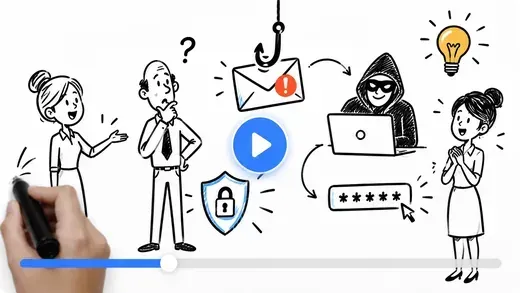
 Incident ResponderEmployee reports turned into verdicts, in one queueAgentic AIA programme AI agents run, as far as you approve
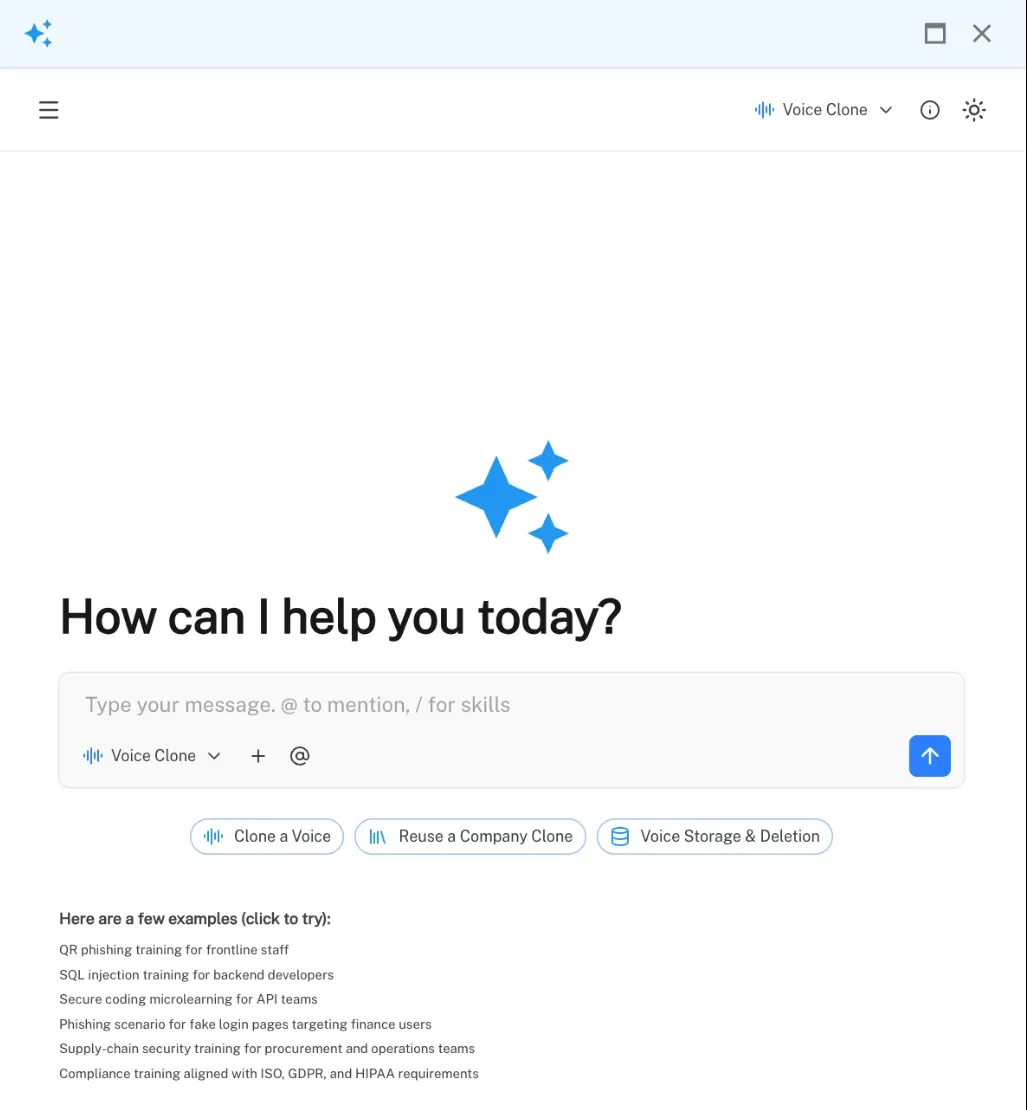
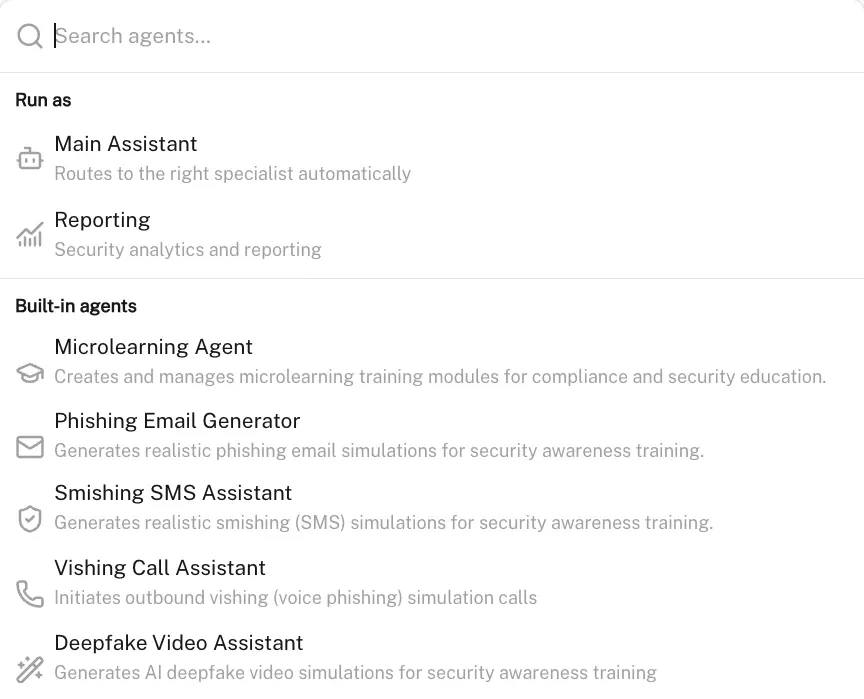


Not ready for a demo? Click through the real console
What secure behaviour management changes
Training that passes the audit is not the same as employees who spot the SMS, the call or the deepfake.
- TriggerSecurity awareness training: Modules on a calendarSecure behaviour management: Training triggered by what each employee does
- ChannelsSecurity awareness training: Email phishing onlySecure behaviour management: Multi-channel phishing simulations, not email-only
- ContentSecurity awareness training: Same content for everyoneSecure behaviour management: Content matched to role, risk and language
- DataSecurity awareness training: Data from the training toolSecure behaviour management: Signals from the security stack you already run
- ProofSecurity awareness training: Completion ratesSecure behaviour management: Behaviour measured before and after
of organisations had a phishing, vishing or smishing incident in the past year.
Why more training does not fix it
“Pre-scheduled, calendar-based training achieves compliance, but fails to alter employee behavior.”
Spot, simulate, nudge, measure
1. Spot
Signals from the security stack you already run become named behaviours.
- Microsoft Entra ID Protection and Defender
- Google SecOps
- Results of your own simulations
2. Simulate
Realistic simulations matched to each employee's risk.
- Email, SMS, call, callback, QR and deepfake
- Scenarios in the employee's language
- By default, nothing goes out until you approve it
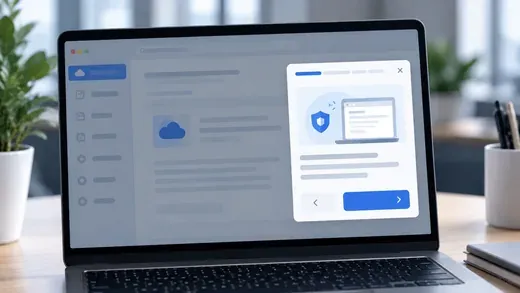
3. Nudge and train
A nudge in the moment, then training for the same behaviour.
- By email, SMS or Teams
- Training mapped to the behaviour
- Capped per employee
4. Measure
The same employees, before and after.
- Report and click rates over time
- By department and by behaviour
- Positive behaviours count too
More than half of organisations launched their first phishing simulation within two weeks of licence start, nearly two in three within 30 days.
Try the console yourself
Simulations that reach the inbox without whitelisting
Click to start a live preview
No form, no sales call. Best in landscape on a phone.
Start the tourThe interactive product tour of the Keepnet console
The tour will not open in this page
Your browser or network is blocking the embedded frame.
Open the tour in a new tab1 of 6
Read more about the phishing simulatorRead more about the vishing simulatorRead more about the smishing simulatorRead more about Agentic AIRead more about the quishing simulatorRead more about callback phishing
What changes after the first simulation
48% fewer clicks
58% lower click rate
The drop held in every cohort size tested, between 31% and 50%.
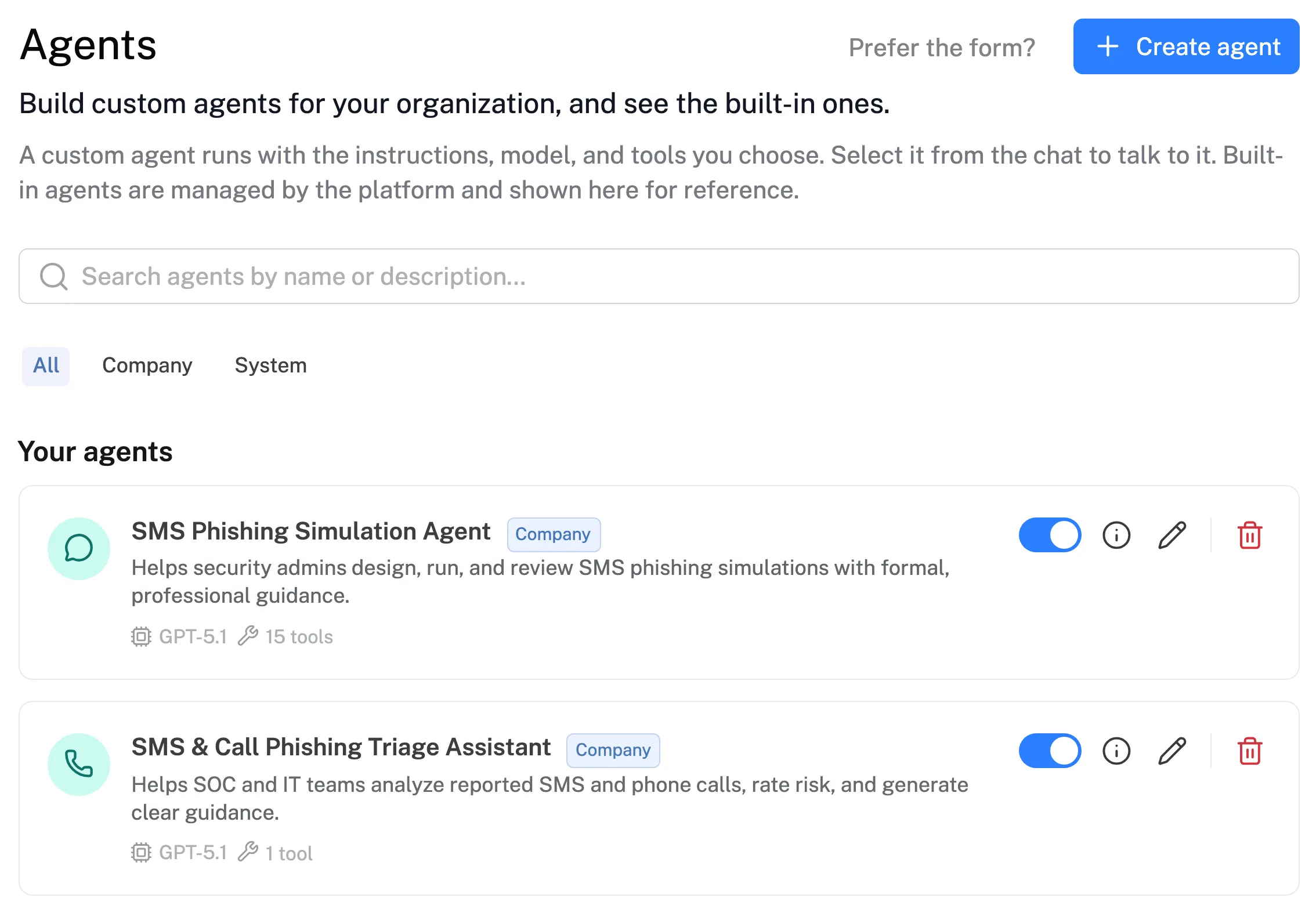
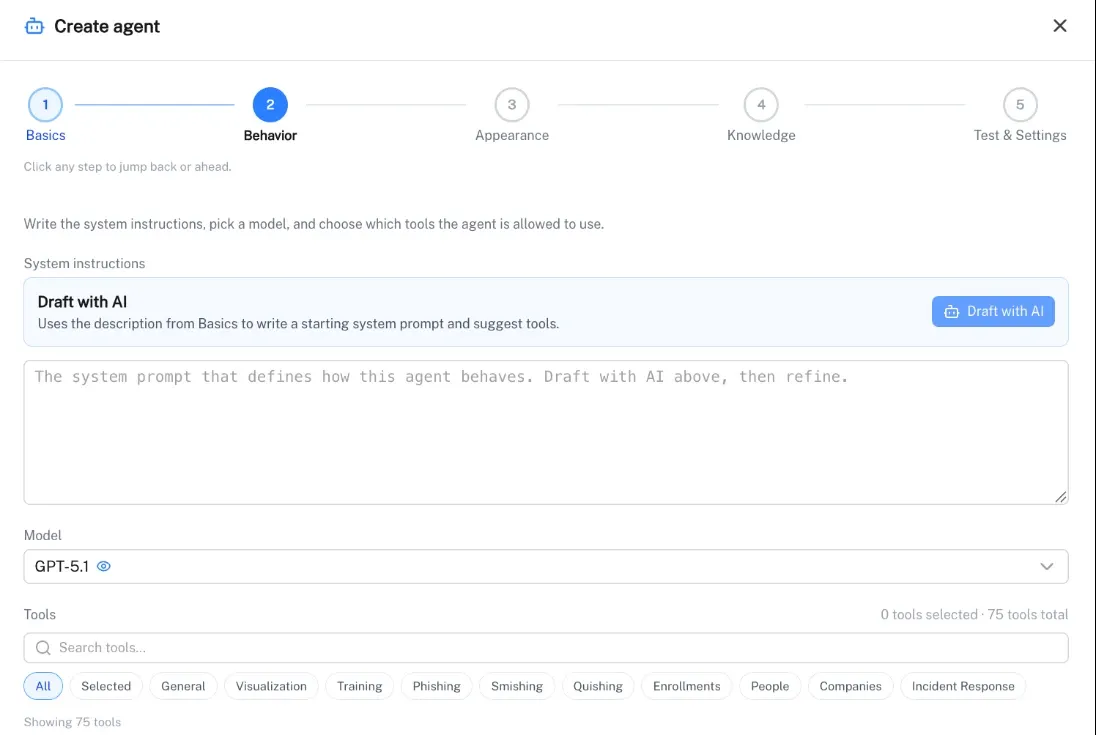
Your programme, run by AI agents you control
AI agents run the loop. By default, nothing goes out until you approve it.
- Approval by default
- Autonomous where you allow it
- ISO/IEC 42001
- Zero PII
- Bring your own model key
- Customer data never trains models
Where it is already running
Pick the sector closest to yours, with published numbers as customers gave them.

In their words




Videos load from YouTube only when you press play.
This video will not play here.Watch it on YouTubeResearch
Find the gaps attackers reach first
Keepnet research on how employees respond to phishing by email, SMS and call. Every finding links to the report it comes from.
Anonymised and aggregated, so no organisation or employee can be identified. Keepnet is also a contributor to the Verizon 2026 Data Breach Investigations Report[5].
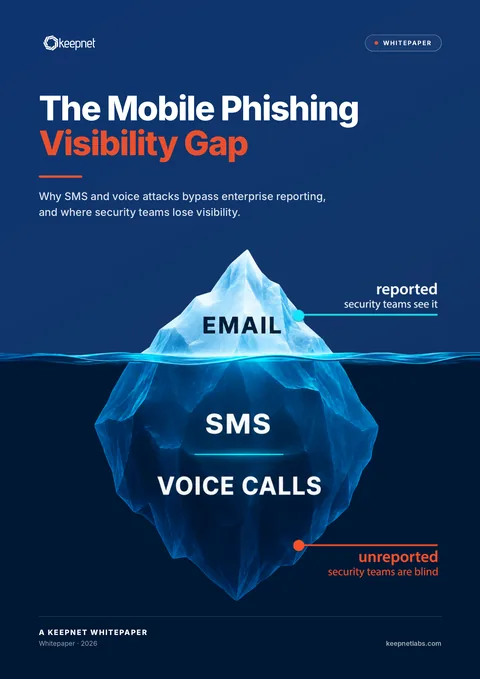 Whitepaper · August 2026The Mobile Phishing Visibility GapFind out where SMS and call phishing escapes your reporting, and how employee reports become usable signals.Read the whitepaper
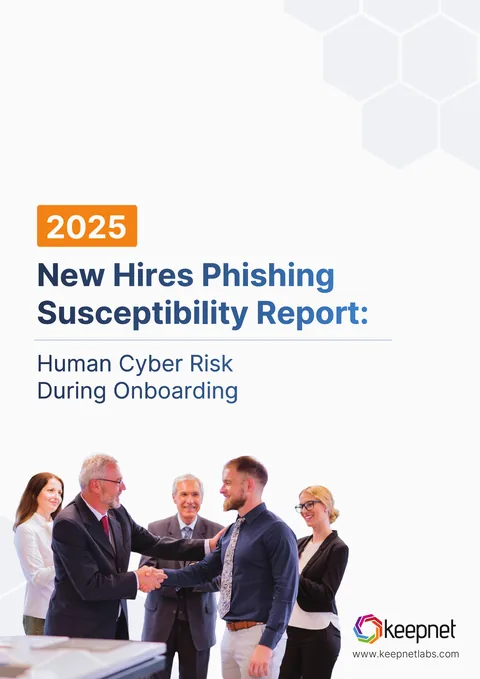 Report · June 202544%more susceptible to phishing: new hires in their first 90 days compared with tenured employeesRead the findings
 Report · February 20246.5%of 3,279 employees called shared sensitive information during simulated vishing calls.Read the findings
"It would be unfair to single out just one feature. The mail scenarios and customisable training modules are particularly excellent."
"It's a really great platform with a lot of flexibility to ensure our requirements are met. Onboarding was friendly, enjoyable, and thorough."
"It's super easy and intuitive to setup campaigns, whilst making it easier for end-users to report phishing emails."
"The product itself works great on day one and delivers immediate value as our team was able to get started with our phishing exercise program immediately."
"It has been consistent, reliable, and implementations over time shows that they really listen customer feedback."
"We've seen a noticeable improvement in how employees react to suspicious emails or phone calls- because they remember the stories."
"Within minutes, we can create realistic, scenario-based templates specific to our organization, reducing setup time while increasing the relevance of training."
"The simulations and campaigns are very customisable and realistic."
"Thanks to Keepnet's Incident Response tool, we reduced the e-mail analysis and response time, which used to take hours, to 2 minutes."
Gartner's notice on these reviews is at the foot of the page.
Keepnet Labs has a rating of 4.9 out of 5 based on 104 ratings in the Security Awareness Computer-Based Training market on Gartner Peer Insights as of October 2026. Gartner and Peer Insights™ are trademarks of Gartner, Inc. and/or its affiliates. All rights reserved. Gartner Peer Insights content consists of the opinions of individual end users based on their own experiences, and should not be construed as statements of fact, nor do they represent the views of Gartner or its affiliates. Gartner does not endorse any vendor, product or service depicted in this content nor makes any warranties, expressed or implied, with respect to this content, about its accuracy or completeness, including any warranties of merchantability or fitness for a particular purpose.
Ready for your security review


Four current certifications, independently audited. Certificates and the full control set are published at doc.keepnetlabs.com/resources/compliance.
Questions buyers ask
Keepnet is a secure behaviour management platform. It turns security awareness training and multi-channel phishing simulations, not email-only, into measurable behaviour change.
More than 11 million employees have taken a Keepnet simulation or training (Keepnet platform data, cumulative to October 2026). Keepnet is headquartered in the UK.
Gartner calls this market secure behaviour management. Forrester and many buyers still call it human risk management.
Either way, the field replaces scheduled awareness training with in-the-moment nudges, simulations across channels and signals from security tools, and measures behaviour change rather than completion. Read the full explanation.
Security awareness training is measured by completion; secure behaviour management is measured by what employees do next.
Gartner's view: “Pre-scheduled, calendar-based training achieves compliance, but fails to alter employee behavior” (Gartner, Fight AI Disinformation: A CISO Playbook for Working with Your CIO, CCO and CMO, Akif Khan, 23 October 2025). Keepnet keeps the training library and compliance courses, and adds the simulations, nudges and measurement around them.
In the Secure Behaviour Dashboard: the same employees before and after, by organisation, department or employee, for any period, with targets you set.
Across 102,452 employees in 158 organisations, the click rate fell from 9.2% on the first simulated phishing email to 4.8% across every simulation that follows (Keepnet anonymised customer research, 1 January 2020 to 29 September 2026).
AI agents build and run campaigns, and by default nothing goes out until you approve it.
You can pilot with one group first. Simulations are generated inside your company policy, deepfake is opt-in with approval over who appears, and simulations and nudges are capped per employee. Keepnet holds ISO/IEC 42001, supports bring-your-own model keys and does not use customer data to train models.
Per employee, with every product available on its own.
Prices are published for organisations up to 1,000 employees; above that, pricing is quoted. See pricing.
See Keepnet with your organisation in mind
- Run multi-channel simulationsFrom email through to deepfake.
- See reporting outcomes and the behaviour scoreReporting, repeat behaviour and remediation, in one board report.
- Explore AI agents and automationSee how simulations, training and follow-up can run with less manual work.

Book a 30-minute demo
Thirty minutes, no cost and no obligation.
Thank you, your request is in
A confirmation is on its way to your inbox.
Thirty minutes with the Keepnet team, on Microsoft Teams. Your details are already filled in.
Prefer to pick a time later? The team will follow up within one working day.
Your demo is booked
A calendar invite is on its way to your inbox, with a Microsoft Teams link.
The booking calendar will not open in this page.
Open the calendar in a new tabSources
- Gartner, “Ditch Security Awareness and Adopt AI-Powered Secure Behavior Management” (G00860839, September 2026), 2026 Gartner CISO Role Survey (n=297).
- Gartner, Fight AI Disinformation: A CISO Playbook for Working with Your CIO, CCO and CMO, Akif Khan, 23 October 2025.
- Keepnet anonymised customer research, email phishing simulations, accounts and licences starting January 2025 to June 2026 (n=428 organisations).
- Keepnet anonymised customer research, email phishing simulations delivered 1 January 2020 to 29 September 2026. Per employee: employees who received at least 12 simulations (n=102,452 employees across 158 organisations). Per organisation: median of the same 158 organisations. Benchmark: all ten cohort sizes tested, the largest 498,861 employees.
- Verizon 2026 Data Breach Investigations Report, p. 50; contributors list, p. 118.